
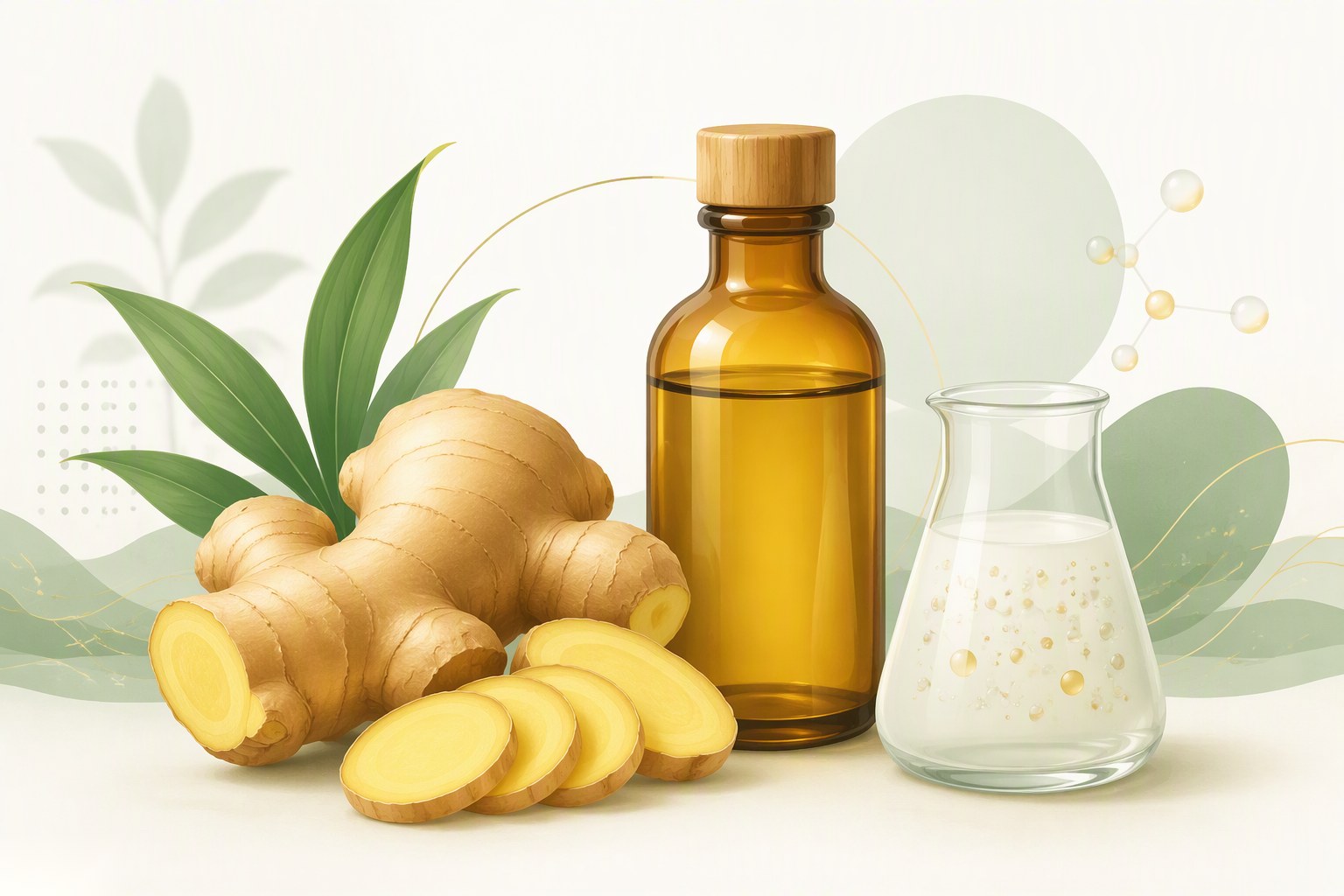
Over the past three years, "clean label" has hardened from a marketing idea into a constraint. In EU retail audit checklists, the presence of E202 (potassium sorbate) or E211 (sodium benzoate) increasingly demands a written justification; North American search volume for "clean label preservatives" keeps climbing. A cohort of mid-size food companies — chilled meats, prepared meals, fresh-cut salads — has started seriously evaluating natural alternatives.
Ginger oil's arrival on that shortlist is no accident:
- Broad-spectrum inhibition: gingerols and sulfur compounds have documented activity against Staphylococcus aureus, E. coli, Listeria monocytogenes, and other common foodborne pathogens.
- Flavor compatibility: the warm, spicy profile fits meat products and Asian-style prepared dishes without the "medicinal" note some botanicals bring.
- Label friendliness: in most markets it can be declared as a natural flavor or ginger extract.
But between "works in the lab" and "works across shelf life" stand two engineering problems — oil-water compatibility and controlled release. That is exactly where the new dosage forms earn their keep.
Two Innovative Dosage Forms
Form 1: Ginger Oil Nanoemulsion
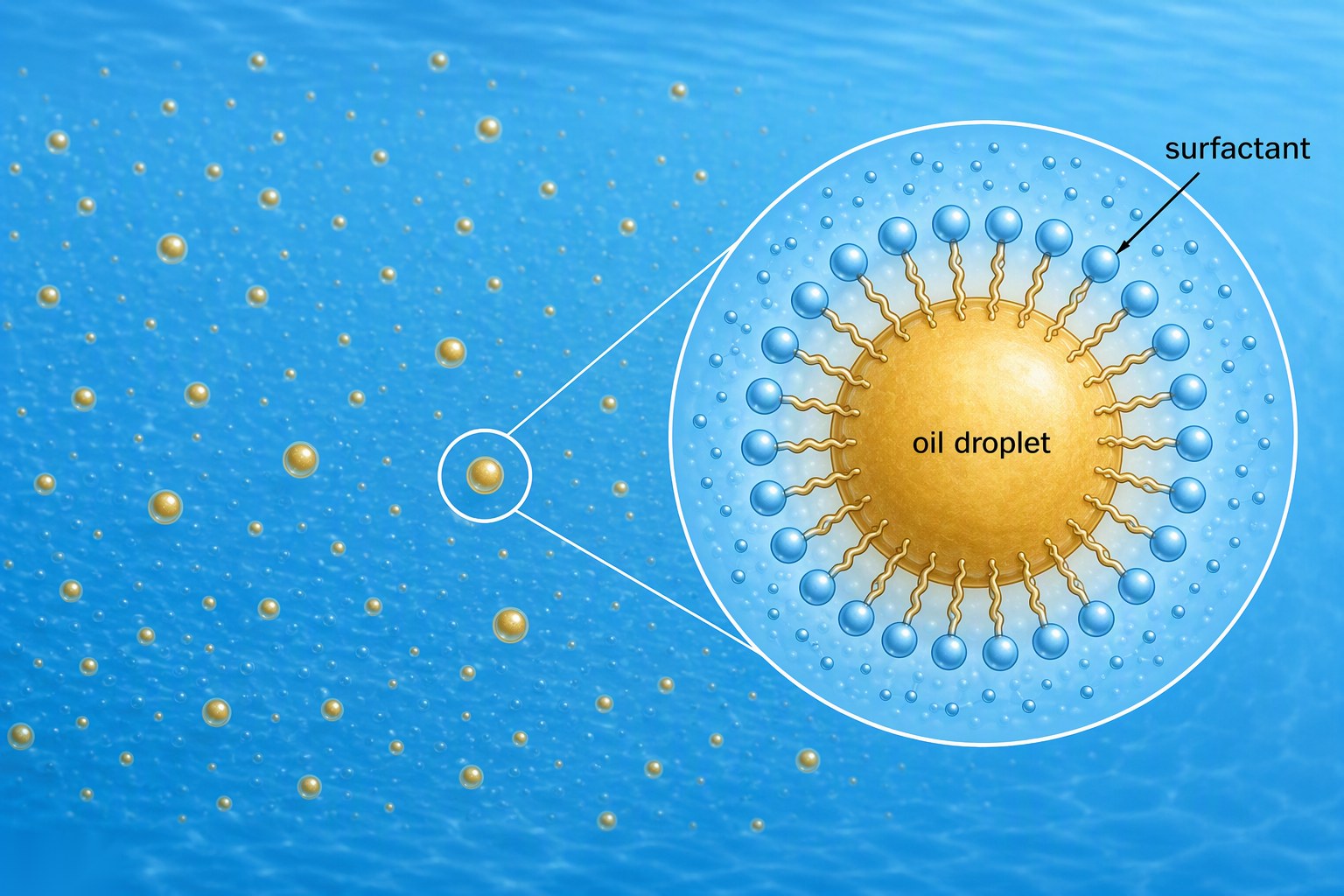
Food-grade emulsifiers (sodium caseinate, the Tween family) plus co-emulsifiers disperse ginger oil into sub-micron droplets. Once nano-sized, oil that could never enter a water-based system stays stably suspended in marinades, coating liquids, and cosmetic serums — and the enlarged surface area puts antimicrobial molecules in closer contact with microbes.
- Typical droplet size: 30–200 nm.
- Best for: injection marinades for chilled meats, fruit & vegetable coating liquids, water-based cosmetic serums.
- Watch out: emulsions are electrolyte-sensitive; high-salt systems (soy-sauce bases, for example) need a stability check first.
Form 2: Ginger Oil-Loaded Hydrogel
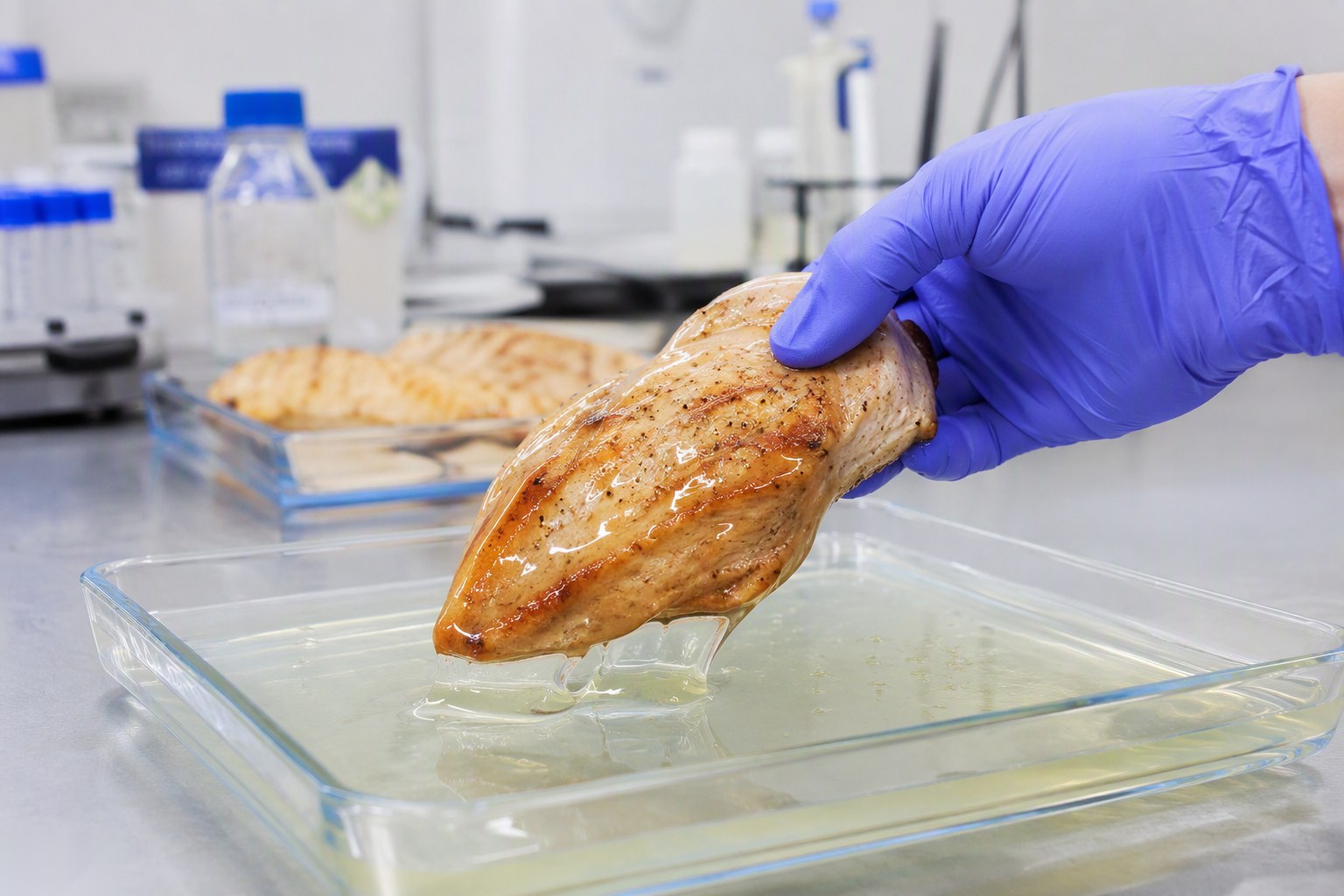
Using polysaccharide skeletons such as chitosan or sodium alginate, ginger oil — or its nanoemulsion — is locked inside a gel network and spread over food surfaces as an edible film. Actives bleed out slowly: concentration stays high early in shelf life and remains effective later, fixing the "overdosed at first, exhausted by week two" decay curve of direct spraying.
- Typical structures: chitosan / oxidized-polysaccharide Schiff-base networks; protein-polysaccharide composites.
- Best for: surface films on ready-to-eat meats, fresh-cut produce preservation, medical dressing bases.
- Watch out: film thickness correlates with release rate — tune it to the target shelf life.
Selection rule of thumb: for in-matrix addition (marinades, fillings), favor the nanoemulsion; for surface protection (ready-to-eat products, fresh-cut), favor the hydrogel film. Where budget allows, combining both — nanoemulsion loaded into a hydrogel — gives the flattest release curve.
Case Study: Migrating a Preservation System at a Middle Eastern Chicken Producer
This case is compiled from a technical-service project in the second half of 2024; customer details are anonymized.
Background
The customer is a mid-size producer of ready-to-eat chicken products in the Middle East — chicken wraps and seasoned pieces sold through convenience-store cold chains. Its problems were textbook:
- Temperature fluctuates at the cold-chain's last mile, and products regularly flirted with microbial limits around days 7–9.
- The existing formula leaned on potassium sorbate — but from 2025 its anchor retail chain requires suppliers to file clean-label transition plans.
- A previous attempt at direct ginger-oil addition separated in the marinade, leaving flavor front-loaded and uneven.
Solution Design
Working with the customer's QA team across three sample rounds, we settled on a two-layer "nanoemulsion in the marinade + hydrogel film on the surface" architecture:
- Layer one: ginger-oil nanoemulsion dosed at 0.3% into the injection marinade, focused on surviving heat treatment.
- Layer two: after cooking, a chitosan-based hydrogel film — itself loaded with ginger-oil nanoemulsion — dip-coated onto the surface, carrying the antimicrobial load through the back half of shelf life.
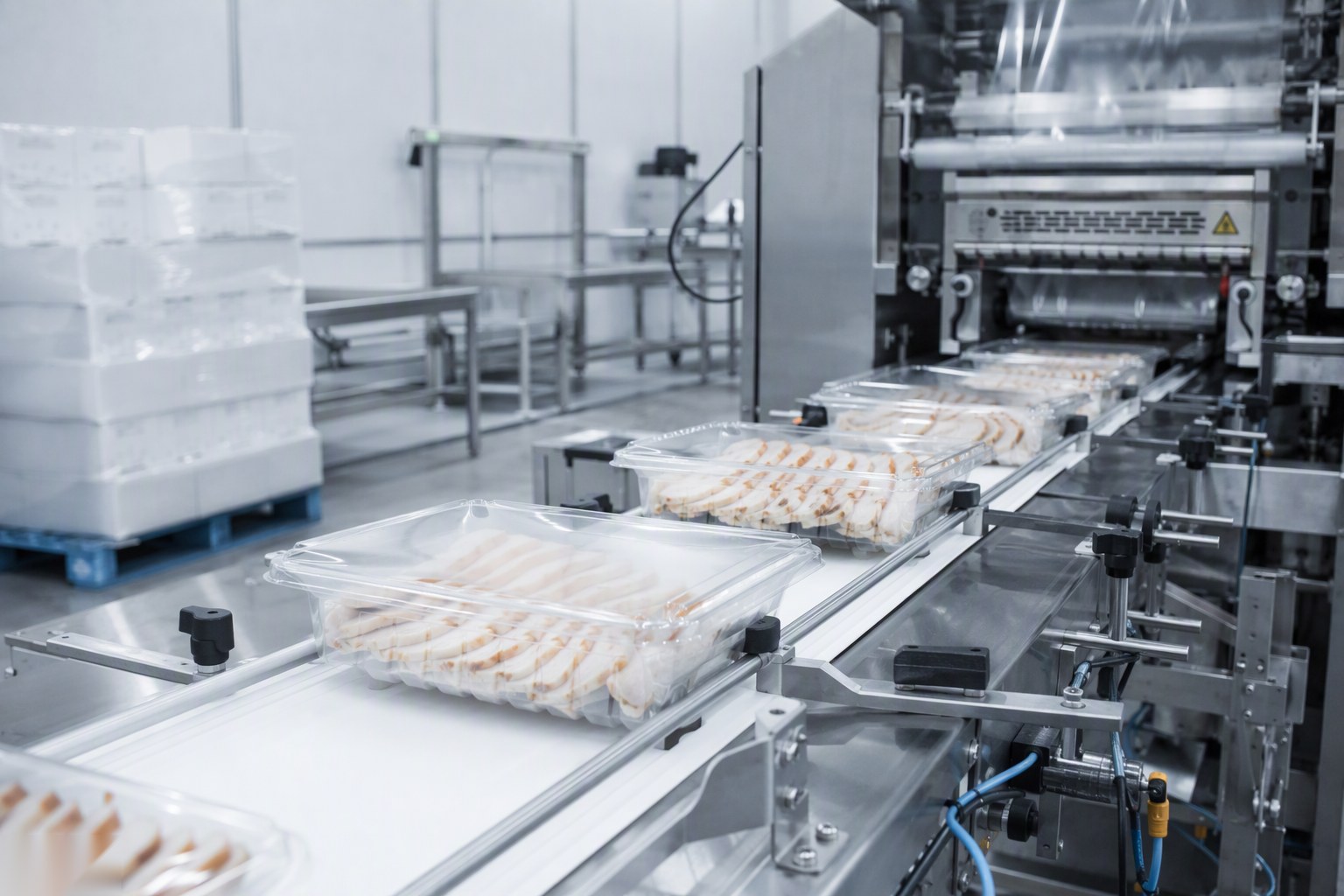
Challenge testing by a third-party lab showed a visibly flatter growth curve for indicator organisms across the target shelf life. One honest note: the ginger system alone did not "double" shelf life — measured chilled life went from 9 days to about 13, and only after upgraded modified-atmosphere packaging did the product reach the chain's 15-day requirement. We said this plainly at project kickoff to avoid the "natural means stronger" expectation trap.
Details That Mattered at Rollout
The taste negotiation. Worried about antimicrobial headroom, the customer pushed the first trial batch to 0.5% nanoemulsion — and the sensory panel ruled the spice note "overrode the chicken itself." Rolling back to 0.3% with a small film-loading adjustment passed blind tasting. Natural-preservation formulas always live under twin constraints: effective dose and sensory acceptance.
The cost math. Reformulation plus the added coating step raised unit cost about 3% per kilogram — in exchange for renewed listing with the chain. For this customer, the ledger was clearly positive.
Where It Stands
The system passed the chain's audit in early 2025 and has been shipping steadily. The customer has since sent cinnamon-oil nanoemulsion samples — same platform — into a beef product line for parallel testing, a common expansion path: once the wall/gel platform is proven, validating a new core takes a fraction of the original timeline.
Beyond Food: Two More Directions
Cosmetics: Anti-Pollution and Scalp Care
Standardized ginger root extract (commonly 42–50% gingerols) is appearing more often in anti-pollution serums and anti-hair-loss scalp formulas. The nanoemulsion's value here is lower irritation and better skin penetration — especially for sensitive-skin positioning.
Sports Topicals: Warm-Up and Recovery
Ginger oleoresin blended into carrier oils (typically 1:8 to 1:12) for warming massage formulas is already a mature category. Differentiation lives in the balance between warming duration and skin irritation — and micro-emulsified dosage forms improve both.
Frequently Asked Questions
Can ginger oil replace potassium sorbate as a food preservative?
In some applications it can serve as an auxiliary preservative. Gingerols and sulfur compounds inhibit common spoilage organisms, but matching chemical preservatives on shelf life usually requires pairing with packaging technology (MAP, vacuum) or blending with other natural preservatives. Run a challenge test before locking the formula.
How is ginger oil nanoemulsion different from regular ginger oil?
Regular ginger oil is an oil phase that separates out of water-based systems. A nanoemulsion disperses that oil into sub-micron droplets (typically under 200 nm) that stay stable in aqueous formulas, with better bioavailability and skin penetration — at the cost of added processing.
How should ginger oil be declared on a clean-label ingredient list?
In most markets it can appear as "natural flavour" or ginger extract, with exact wording depending on the destination market. The EU requires compliance with Regulation (EC) No 1334/2008 on flavourings; the US follows the FEMA GRAS list. Have a regulatory consultant confirm label wording before export.
What information should I provide for a dosage-form sampling project?
Helpful inputs: target product type (beverage / meat / skincare), system pH, alcohol or high-salt content, processing temperature profile, and target shelf life. The more specific the brief, the higher the first-sample hit rate — typically saving one or two rounds of iteration.